🎧 Podcast Episode
Listen to this article as a podcast! Two hosts break down the key points in an easy-to-follow conversation.
▶ Press play to start listening
🌐 日本語版はこちら: GameFi情報局 で読む
TON GameFi in 2026: Why Telegram Bot Games Deserve Your Attention Now
Telegram’s gaming ecosystem on the TON blockchain (The Open Network — a Layer 1 blockchain integrated with Telegram) has quietly become the largest onboarding funnel in crypto gaming. After the tap-to-earn frenzy of 2024 cooled off, the projects that survived are building something more durable. This guide breaks down which TON-based Telegram bot games are worth watching in 2026 — and what separates the signal from the noise.
The Number That Should Stop You Scrolling
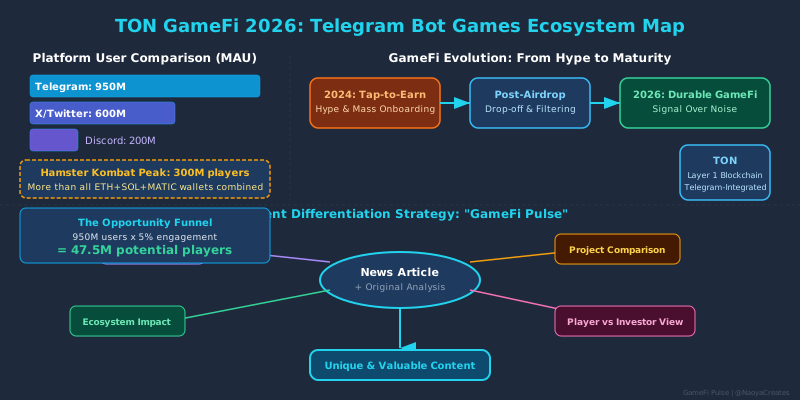
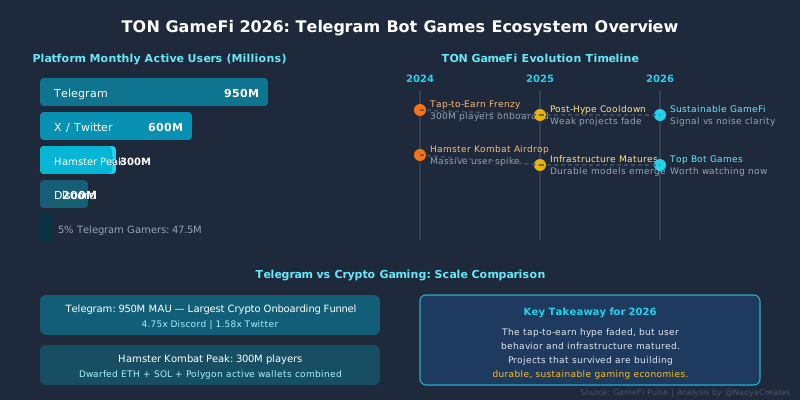
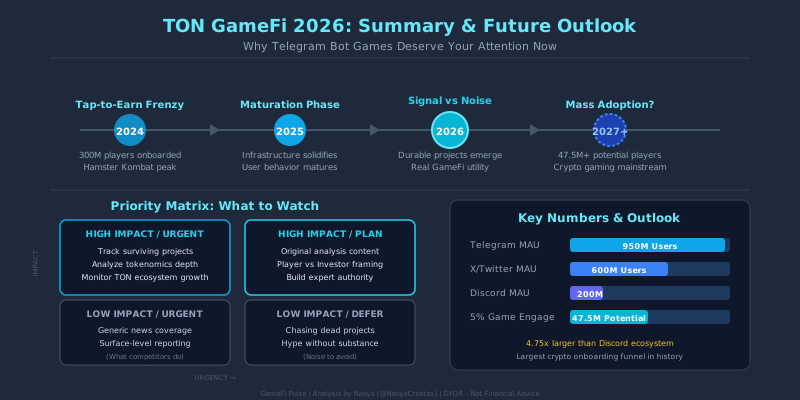
Telegram now has over 950 million monthly active users (for comparison, Discord has roughly 200 million and X/Twitter around 600 million). Of those, Hamster Kombat reportedly onboarded over 300 million players at its peak in mid-2024 — a number that dwarfs the entire active wallet count across Ethereum, Solana, and Polygon combined. Even after the inevitable drop-off post-airdrop, the infrastructure and user behavior patterns that emerged from that wave haven’t disappeared. They’ve matured.
Telegram’s 950M user base is roughly 4.75x the size of Discord’s. Even if only 5% engage with mini-app games, that’s 47.5 million potential players — larger than the entire blockchain gaming population on most chains.
Why TON GameFi Matters Right Now
Three forces are converging to make TON-based games relevant in 2026, and none of them are hype-driven.
First, distribution is solved. Most blockchain games struggle to get users to download a wallet, bridge funds, and sign transactions. Telegram Mini Apps (lightweight web apps that run inside Telegram chats) eliminate all of that. A user taps a link, opens the game, and is playing within seconds. The TON wallet integration is built into Telegram itself, reducing friction to near-zero.
Second, the survivor bias is working in players’ favor. The 2024 tap-to-earn bubble saw hundreds of clicker games launch and die within weeks. The projects still operating in 2026 have shipped actual gameplay loops, iterated on tokenomics (the economic design of in-game tokens), and built retention mechanics beyond “tap and pray for an airdrop.”
Third, TON’s technical infrastructure has improved. Transaction fees on TON remain fractions of a cent (typically $0.005–$0.05 per transaction, compared to Ethereum’s average of $1–$5 during normal periods). The chain processed over 2 million daily transactions during peak gaming activity in late 2024, demonstrating capacity that many competing chains lack.
TON’s edge isn’t technology — it’s distribution. No other chain has a built-in messenger with nearly a billion users. For anyone working in marketing or community building, this is the closest thing to a “zero-CAC” acquisition channel in Web3.
Top Telegram Bot Games to Watch in 2026
Below is a breakdown of the projects that have demonstrated staying power, genuine gameplay, or strategic positioning worth monitoring. I’ve categorized them by game type and maturity.
1. Notcoin (NOT) — The Pioneer That Pivoted
Notcoin launched as a simple tap-to-earn game in early 2024 and attracted over 35 million players before its token launch. What makes it relevant in 2026 isn’t the original clicker — it’s the ecosystem Notcoin is building around its brand and community. The NOT token launched on TON and was listed on major exchanges including Binance and OKX. The team has since expanded into a broader gaming platform, funding and incubating other mini-app projects. Think of Notcoin less as a game and more as a brand-turned-launchpad.
2. Catizen — Cat-Themed, Surprisingly Deep
Catizen blends casual cat-merging mechanics with DeFi (decentralized finance — financial services built on blockchain) elements. It reportedly surpassed 20 million users and generated notable on-chain revenue through in-game purchases before its token launch. The game stands out because its revenue model doesn’t rely solely on token inflation — players actually spend within the game, creating a more sustainable loop. The CATI token trades on multiple exchanges.
3. Fanton Fantasy Football — Sports Meets Telegram
Fanton brings fantasy sports into Telegram Mini Apps, letting users draft real football (soccer) players and compete based on real-world match performance. It’s a different animal from tap-to-earn entirely. Sports-based games tend to have stronger retention because engagement is tied to real-world events — actual matches create natural daily/weekly return triggers. Fanton has integrated TON wallet payments and NFT (non-fungible token — unique digital assets on blockchain) player cards.
4. xRare — Trading Card Collectibles
xRare focuses on digital trading cards within Telegram, leveraging TON for ownership verification and peer-to-peer trading. The collectible model has proven durable in traditional gaming (think Pokémon cards or FIFA Ultimate Team), and bringing it into Telegram’s social environment creates natural viral loops — players trade cards directly in group chats.
5. Pixelverse (PIXFI) — Action-Oriented Combat
Pixelverse differentiated itself from clickers by introducing cyberpunk-themed PvP (player-versus-player) combat. Players engage in battle sequences rather than passive tapping. The PIXFI token launched and is listed on exchanges. What’s notable is the team’s focus on actual game mechanics — there are equipment upgrades, skill trees, and competitive rankings that resemble a traditional mobile game more than a typical crypto mini-app.
6. GAMEE (WatBird / Arc8 on TON) — The Veteran Platform
GAMEE, acquired by Animoca Brands (a major Web3 gaming and investment company), brought its established casual gaming platform to Telegram. With a catalog of multiple mini-games rather than a single title, GAMEE represents the “platform play” — aggregating players across game types. The WatBird experience on Telegram taps into GAMEE’s existing tournament infrastructure.
The 2026 TON gaming landscape is splitting into three lanes: platform plays (Notcoin, GAMEE), single-game specialists (Fanton, Catizen), and hybrid DeFi-game experiments. Which lane wins likely depends on whether Telegram users want depth or variety.
Comparison: TON Games vs. Other Chain Gaming Ecosystems
To understand where TON GameFi sits in the broader landscape, it helps to compare it against other chains actively competing for gaming users.
| Feature | TON (Telegram) | Immutable X (IMX) | Ronin (Axie) | Sui |
|---|---|---|---|---|
| Built-in User Base | 950M+ (Telegram) | None inherent | ~2M wallets | None inherent |
| Avg. Transaction Fee | $0.005–$0.05 | $0 (gas-free NFT) | ~$0.001 | ~$0.003 |
| Onboarding Friction | Very Low (in-app) | Medium (passport) | Medium (wallet) | Medium (wallet) |
| Dominant Game Type | Casual / Social | Card / Strategy | RPG / Breeding | Various (early) |
| Biggest Risk | Telegram dependency | Game quality | Axie concentration | Ecosystem maturity |
| 2026 Momentum | Growing | Stable | Rebuilding | Emerging |
The critical difference: TON doesn’t need to convince users to install anything. That single advantage — zero-install gameplay through Telegram — is likely worth more than any technical superiority another chain might offer. When your game lives where people already chat with friends, the conversion funnel collapses from five steps to one.
If you’re a player looking for the lowest entry barrier, TON wins hands down. If you want deeper AAA-style gameplay, Immutable X or Ronin titles currently offer more polish. The question for 2026: can TON games close the quality gap while keeping the accessibility advantage?
What the On-Chain Data Suggests
Rather than relying on self-reported user numbers (which are notoriously inflated in Telegram gaming), let’s look at what verifiable on-chain metrics tell us. According to publicly available TON blockchain explorers, daily active addresses on TON surged during major game launches and token events, often exceeding 1 million unique addresses on peak days in late 2024. By comparison, Solana — frequently cited as the fastest-growing gaming chain — typically records 1–3 million daily active addresses but across a much broader set of use cases including DeFi and meme tokens.
Token performance paints a mixed picture. NOT (Notcoin) experienced significant post-launch volatility, which is standard for airdropped gaming tokens. CATI (Catizen) and PIXFI followed similar patterns. What’s more telling than price is trading volume persistence — tokens that maintain daily trading volume three months post-launch tend to indicate genuine community engagement rather than airdrop-dump dynamics. As of publicly available data, NOT has maintained exchange listings and trading activity, suggesting a base of holders beyond pure speculators.
For everyday readers, this matters because it shows a shift: Telegram games are no longer purely about “get free tokens and sell.” The ones surviving into 2026 need real players spending real time — and occasionally real money — inside them.
On-chain data is the lie detector for GameFi projects. Self-reported user counts are marketing; daily active addresses and sustained trading volume are evidence. Always cross-check claims against blockchain explorers before committing time or money to any project.
How This Affects Your Work and Life
If you work in marketing, community management, or product development, TON GameFi is essentially a case study in frictionless onboarding at scale. The lesson transfers directly: reducing steps in your user funnel matters more than perfecting any single step. Telegram games proved you can onboard millions in days if you remove enough barriers — even if the product itself is dead simple.
If you’re a player or casual crypto user, the practical implication is straightforward. You don’t need to bridge tokens across chains, set up MetaMask, or understand gas fees to participate in TON gaming. You open Telegram, find a game bot, and start playing. That’s it. Your TON wallet exists inside the app you already use daily.
If you’re an investor or someone tracking GameFi trends, the signal to watch in 2026 is revenue per user, not total user count. The tap-to-earn era inflated user metrics beyond usefulness. The games that generate sustainable in-game revenue without relying on token inflation will be the ones that survive the next cycle. Catizen’s in-app purchase model is the template more projects are likely to follow.
For freelancers and indie developers, the TON Mini Apps ecosystem represents possibly the most accessible entry point into blockchain game development. The Telegram Bot API is well-documented, the TON SDK supports JavaScript/TypeScript, and the potential audience is massive. Several community grants and hackathons funded by the TON Foundation have supported new developers entering the ecosystem.
Whether you’re building, investing, or just playing — TON’s Telegram integration rewrites the rules on user acquisition cost. The same principle applies outside crypto: meet users where they already are, and remove every step you can between “discover” and “use.”
Summary: Three Things to Remember
1. Distribution beats technology. TON’s killer feature isn’t its consensus mechanism or transaction speed — it’s Telegram’s 950 million users. Games that leverage social features (group chats, channels, direct sharing) will outperform those that treat Telegram as just a launcher.
2. The survivor class is real. After hundreds of tap-to-earn clones died in 2024, the remaining TON games — Notcoin, Catizen, Fanton, Pixelverse, and a few others — represent battle-tested teams. That doesn’t guarantee success, but it dramatically improves the odds compared to brand-new projects.
3. Revenue model is the make-or-break factor. Games relying on token inflation to reward players will eventually face death spirals when new user growth slows. Games generating revenue through in-app purchases, tournament fees, or NFT marketplace royalties have a path to sustainability.
Author’s Take: I believe TON GameFi’s biggest risk in 2026 isn’t competition from other chains — it’s Telegram itself. If Telegram changes its Mini Apps policy, introduces restrictive fees, or faces regulatory challenges in key markets, every game on the platform is affected simultaneously. That platform dependency is real, and it’s something neither players nor investors should ignore. Diversification across ecosystems isn’t just smart portfolio management — it’s a hedge against a single point of failure that the entire TON gaming vertical shares.
Remember three words: distribution, survivors, revenue. If a TON game has all three working in its favor, it’s worth your attention. If it’s missing even one, proceed with extra caution.
Next Steps: What You Can Do Today
- Set up a TON wallet inside Telegram. Open @wallet in Telegram to activate your built-in TON wallet. You don’t need to buy anything — just familiarize yourself with how it works. This takes under two minutes and prepares you to test any Telegram Mini App game without scrambling for setup guides later.
- Try one game from each category. Open Notcoin (platform play), Catizen (casual + DeFi), and Fanton (sports/skill-based) to compare the user experience firsthand. Don’t invest anything — just play for 15 minutes each and note the differences in engagement loop design. Your own experience is worth more than any article’s description.
- Bookmark TON blockchain explorers. Use Tonviewer or Tonscan to verify any project’s on-chain activity before committing time or funds. Check daily active addresses and contract interactions — these numbers don’t lie the way marketing dashboards can.
Original Analysis
Author’s Perspective
The TON GameFi wave is fundamentally different from previous blockchain gaming cycles, and I think the industry is underestimating that difference. When Axie Infinity peaked, it required players to buy NFTs worth hundreds of dollars just to start. When StepN went viral, it needed a dedicated app download and GPS tracking. TON games ask for nothing more than opening a chat. That gap in entry friction isn’t incremental — it’s structural. It creates an entirely different player demographic: younger, less crypto-native, more social-media-fluent, and far less tolerant of bad UX.
Impact on the GameFi Ecosystem
The broader GameFi ecosystem is being forced to reckon with what TON proved: most blockchain gamers don’t care about decentralization. They care about fun, rewards, and social interaction — in roughly that order. This is uncomfortable for projects that spent years building on-chain complexity. But it’s reality. TON’s success will likely push other chains to prioritize embedded wallet experiences, social sharing hooks, and sub-second onboarding flows. Expect Solana and Base to aggressively copy the Telegram Mini App model by building equivalent integrations with other messaging platforms.
Player vs. Investor Perspective
If you’re a player, TON games in 2026 offer the best risk-free exploration opportunity in GameFi. You can try dozens of games without spending a cent or connecting an external wallet. The worst case is wasted time. If you’re an investor, the calculus is harder. TON gaming tokens have historically been high-volatility, airdrop-driven assets with questionable long-term value accrual. The tokens worth watching are those tied to games with genuine in-app revenue — not just user count vanity metrics. Look for projects that publish transparent revenue data and have token buyback or burn mechanisms tied to actual earnings. The gap between “popular Telegram game” and “good token investment” remains wide, and conflating the two is the fastest way to lose money in this space.
The player opportunity in TON GameFi is strong and low-risk (free to explore). The investor opportunity is murkier — token performance depends on revenue models, not user counts. Never confuse a fun game with a good investment.
Data Sources
- TON Foundation — Official Website
- Tonviewer — TON Blockchain Explorer
- Tonscan — TON Network Explorer
- Telegram — Official Platform
- CoinMarketCap — Notcoin (NOT) Token Data
- CoinMarketCap — Catizen (CATI) Token Data
- TON Developer Documentation — DApps & Mini Apps
- DappRadar — Blockchain Activity Tracker
Disclaimer: The information on this site is for educational and informational purposes only and should not be considered financial or investment advice. In-game assets and tokens carry significant risk. Always do your own research (DYOR) before making any investment decisions.
About the Author: Naoya — Web3 researcher specializing in GameFi, blockchain gaming, and Play-to-Earn ecosystems. He analyzes the latest GameFi projects and tokenomics from both player and investor perspectives.
🔗 Follow on X: @NaoyaCreates
Related Posts not found.