From experience, Heroes of Mavia indicates that game loops must prioritize sink mechanics#GameFi #Web3Gaming
Quick Video Breakdown: This Blog Article
This video clearly explains this blog article.
Even if you don’t have time to read the text, you can quickly grasp the key points through this video. Please check it out!
If you find this video helpful, please follow the YouTube channel “GameFi+Plus,” which delivers daily news.
https://www.youtube.com/@GameFiPulse
Read this article in your native language (10+ supported) 👉
[Read in your language]
Dissecting Heroes of Mavia’s Alliance Wars: Tokenomics and Sustainability in the 2026 GameFi Landscape
🎮 Gameplay Type: Strategy (Mobile Web3 MMO)
👍 Recommended For: Token economy analysts, long-term GameFi investors, sustainability-focused researchers
In the evolving GameFi sector of 2026, where Web3 gaming is shifting beyond simple play-to-earn models toward more integrated economic systems, Heroes of Mavia stands out with its latest tease of “Alliance Wars” as a competitive mode. Built on the Base blockchain, this mobile strategy game has been adapting since its earlier iterations, incorporating NFT ownership and token mechanics to create a persistent economy. Structurally, this matters because it addresses key pain points in GameFi, such as token inflation and player retention, by introducing alliance-based competition that could enhance token sinks—mechanisms that remove tokens from circulation to maintain value. Drawing from official roadmaps and on-chain data, we’ll analyze why this update could signal a pivot toward sustainability, while highlighting inherent risks in a market still recovering from 2025’s crashes.
Lila (Gamer): Before we get into the numbers, let’s remember what traditional games felt like. In a Web2 strategy game like Clash of Clans, you’d grind for hours building your base, only for all that progress to be locked behind the developer’s servers. If they shut down or reset, poof—your time investment vanishes. No real ownership, no way to sell your upgrades on a secondary market. It’s like renting a house you can never own.
John (Analyst): Exactly, and that’s the “before” state we’re comparing against. GameFi projects like Heroes of Mavia flip this by using blockchain for true asset ownership via NFTs. Your in-game items—bases, troops, resources—are yours in a digital wallet, tradable on markets like OpenSea. But here’s the roast: many early GameFi tokens crashed because they promised endless earnings without balancing supply. Mavia’s approach, with its MAVIA token, aims to learn from that by tying economy to gameplay depth, but we’ll audit if Alliance Wars truly fixes the leaks.
Core Mechanism: Token Economy Breakdown
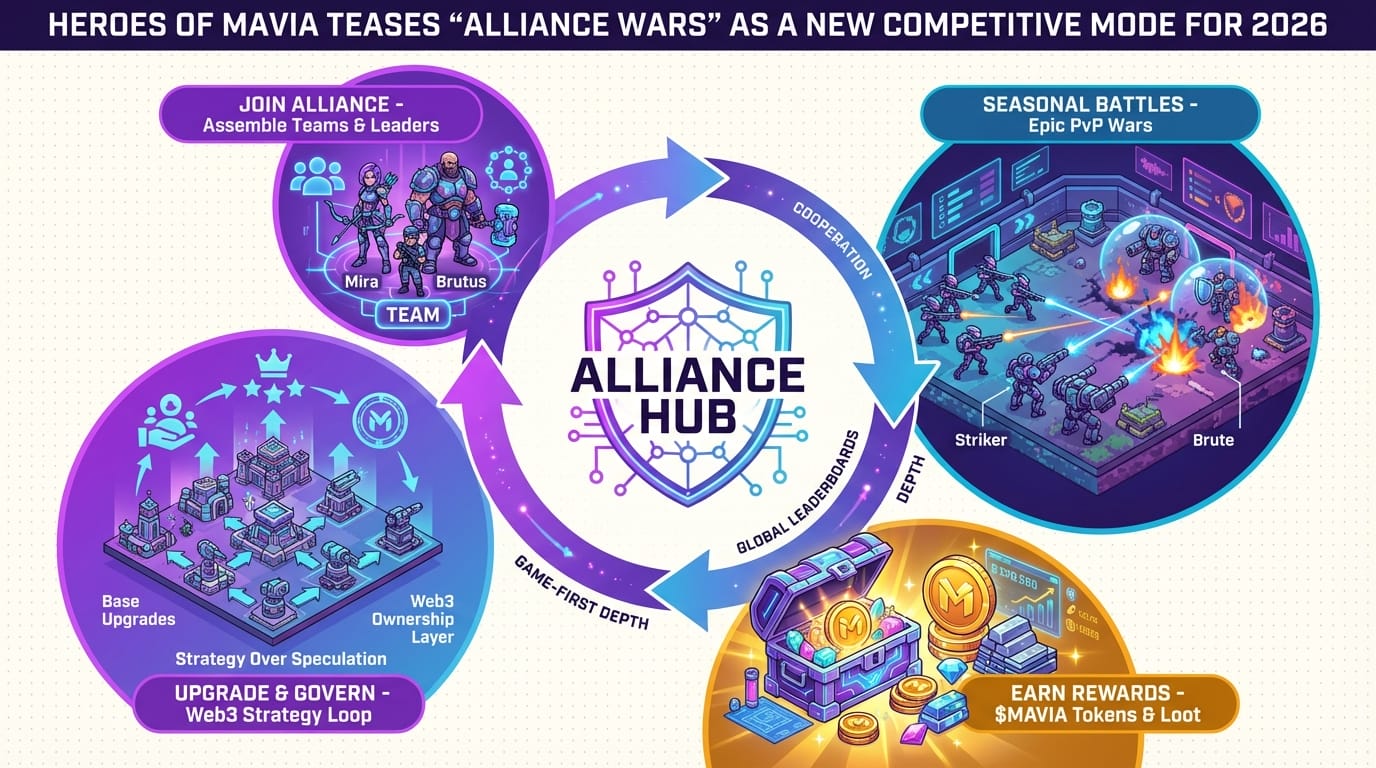
John (Analyst): Let’s dissect the tokenomics objectively. MAVIA, the native token, follows a utility model where it’s emitted through gameplay rewards—think earning it by winning battles or completing quests in this MMO strategy setup. From the 2025 roadmap and in-depth reports (like OneKey’s analysis), emission is capped with a total supply of around 250 million tokens, but vesting schedules for team and investors introduce inflation risks if not managed. Alliance Wars, teased for 2026, could act as a token sink by requiring MAVIA for alliance formations, entry fees, or upgrades, effectively burning or locking tokens to reduce circulating supply. This is built on Base for low fees, using Chainlink for random elements in battles to ensure fairness—no shady RNG here.
Lila (Gamer): From a player’s view, it’s not just numbers; it’s how these mechanics feel in-game. But John, you’re right—sustainability hinges on balancing new token inflows with outflows. If Alliance Wars boosts player engagement without flooding the market, it could stabilize prices, unlike 2025’s token crashes we saw in reports from W3Gamer.
John (Analyst): Precisely. Long-term risks include hyperinflation if rewards outpace sinks, or external factors like Base network congestion. Audits from reputable firms (check official docs on Heroes of Mavia’s site) show solid smart contracts, but always verify on-chain via explorers like Basescan before engaging. Remember, GameFi is high-risk; outcomes depend on market conditions.
Use Cases / Play Styles
Lila (Gamer): Even in an analytical lens, participation varies. One style is the strategic alliance leader: You form guilds, stake MAVIA for competitive edges in Alliance Wars, and coordinate attacks—focusing on community building over quick flips.
John (Analyst): Another is the economy observer: Hold NFTs like land or heroes, monitor token flows via dashboards like Dune Analytics, and participate minimally to gauge sustainability without heavy commitment.
Lila (Gamer): Lastly, the hybrid researcher: Play casually to test mechanics, then analyze data from whitepapers or CoinDCX predictions, blending fun with risk assessment—always starting small to understand volatility.
| Aspect | Traditional Web2 Game | Heroes of Mavia (GameFi Project) |
|---|---|---|
| Ownership | No true ownership; assets tied to developer accounts | NFT-based ownership; tradeable on secondary markets |
| Progression | Grind-based, no real-world value extraction | Earn MAVIA through play, upgradable via token sinks |
| Economy Design | Centralized, in-app purchases only | Decentralized with emission/sink balance, risks of inflation |
Conclusion
John (Analyst): In summary, Heroes of Mavia’s Alliance Wars update offers learning value in how competitive modes can strengthen GameFi economies, with design strengths in NFT integration and sink mechanisms that promote longevity. However, structural risks like token dilution and market dependency remain—outcomes hinge on player behavior, adoption rates, and broader crypto trends. Always audit on-chain data and start small; GameFi is inherently volatile.
Lila (Gamer): It’s a reminder that while the fun is there, sustainability is key—evaluate critically before diving in.

👨💻 Author: SnowJon (Web3 & AI Practitioner / Researcher)
A researcher leveraging insights from the University of Tokyo Blockchain Innovation Program to analyze GameFi, Web3, and digital economies from a practical and structural perspective.
His focus is on translating complex systems into frameworks that readers can evaluate and think about critically.
*AI may assist with drafting, but final verification and responsibility rest with the human author.
References & Further Reading
- Heroes of Mavia Teases “Alliance Wars” as a New Competitive Mode for 2026
- MAVIA In-Depth Research Report: Token Future Development & Price Outlook
- Heroes of Mavia 2025 Roadmap Unveils Major Game Updates
- Heroes of Mavia Price Prediction 2025–2030
- Crypto Gaming’s Brutal 2025: Failures, Fallout, and Flickers of Hope