
Can GameFi survive? Onchain Heroes’ pivot from fully onchain to hybrid offers a blueprint for sustainable tokenomics and better UX.#GameFi #BlockchainGaming #Tokenomics
Quick Video Breakdown: This Blog Article
This video clearly explains this blog article.
Even if you don’t have time to read the text, you can quickly grasp the key points through this video. Please check it out!
If you find this video helpful, please follow the YouTube channel “GameFi+Plus,” which delivers daily news.
https://www.youtube.com/@GameFiPulse
Read this article in your native language (10+ supported) 👉
[Read in your language]
Onchain Heroes’ Shift from Fully Onchain: Implications for OCH World’s Game Economy and Sustainability
🎮 Gameplay Type: Idle RPG (Hybrid Onchain/Offchain)
👍 Recommended For: Tokenomics enthusiasts, blockchain game developers, long-term Web3 investors
Lila (Gamer): Hey everyone, as a guild manager who’s always hunting for games that balance fun and fairness, I was intrigued by Onchain Heroes’ recent pivot. But let’s be real—this isn’t just about gameplay; it’s a structural change that could make or break the project’s longevity. John, what’s your take on why this matters in the broader GameFi market?
John (Analyst): Lila, spot on. In a market flooded with over 2,000 GameFi projects as of late 2025—many of which crash due to unsustainable token emissions—this shift by Onchain Heroes away from a purely onchain model signals a pragmatic response to scalability issues. According to recent updates, they’re moving to a hybrid setup combining onchain payments with offchain systems for faster updates. This isn’t hype; it’s a design philosophy aimed at addressing the high gas fees and slow transaction times that plague fully onchain games. Structurally, it matters because it could enhance player retention without inflating the token supply uncontrollably, but we’ll dissect if it’s truly sustainable.
Before diving into Onchain Heroes and OCH World, let’s contrast this with the “before” state of gaming. Traditional Web2 games, like your average mobile RPG, lock players into centralized servers where all progress—items, levels, currencies—is essentially rented. Spend hundreds of hours grinding for a rare sword? If the developer shuts down the servers (think old MMOs like City of Heroes), it’s gone forever. No real ownership, no resale value; it’s pure sunk cost. Enter GameFi: projects like Onchain Heroes introduce blockchain elements, where assets become NFTs you truly own in your wallet, tradable on secondary markets. This shifts the paradigm from “pay-to-play” to potential “play-to-earn,” but with risks like token volatility. Onchain Heroes’ hybrid pivot aims to blend Web2 accessibility with Web3 ownership, potentially reducing the barriers that make fully onchain games feel clunky.
Core Mechanism: Token Economy and Emission Balance
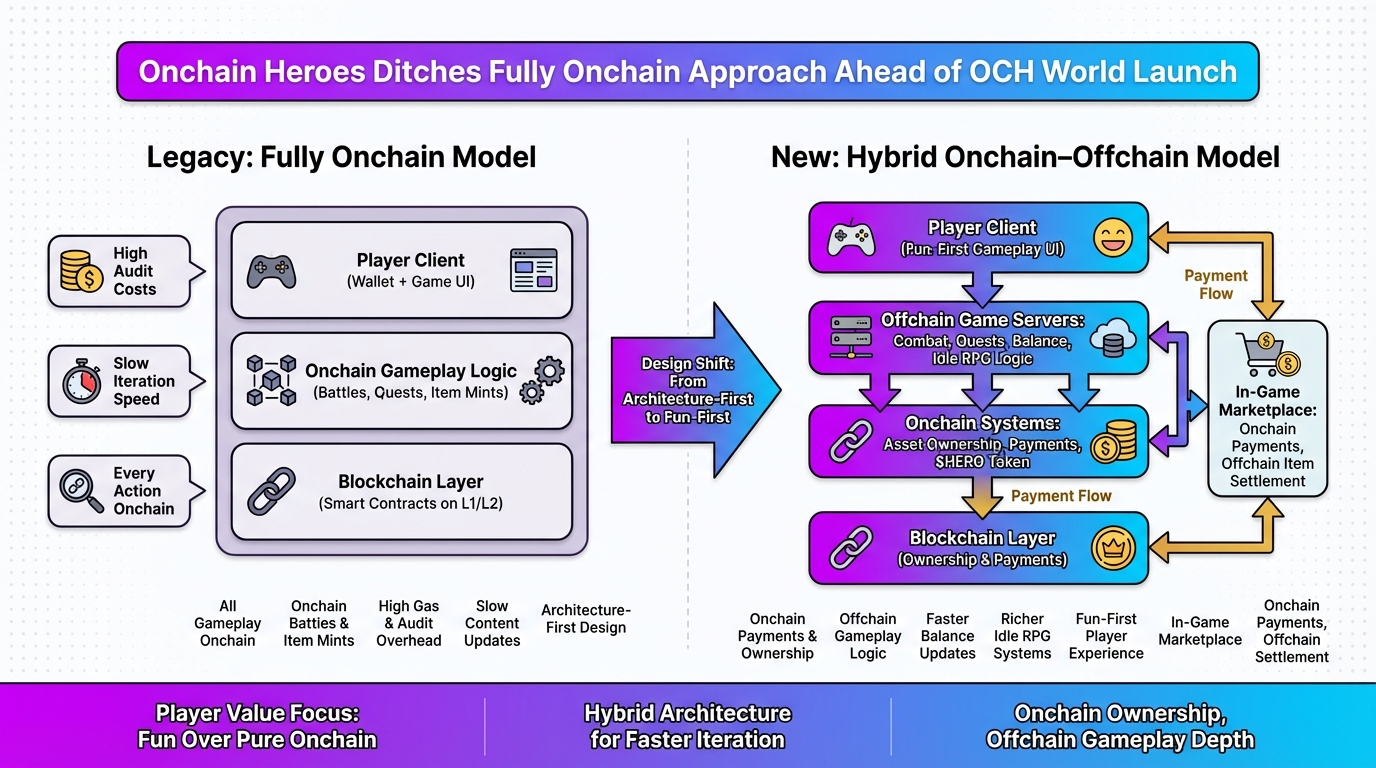
John (Analyst): Let’s audit the core: Onchain Heroes was initially pitched as fully onchain, meaning every action—from battles to item minting—happens directly on the blockchain, like using Ethereum or in this case, potentially Abstract Chain as per later integrations. But ditching that for a hybrid model? Smart move, if executed right. Tokenomics here revolve around a utility token (likely $OCH or similar, based on project docs) used for in-game purchases, upgrades, and governance. Emission mechanisms—how new tokens enter circulation—appear tied to gameplay rewards, but the hybrid shift suggests offchain processing for routine actions to curb inflation.
In fully onchain setups, every transaction emits gas fees, leading to rapid token supply growth if not balanced by sinks—mechanics that remove tokens, like burning for upgrades or staking for yields. Onchain Heroes’ pivot, as reported, prioritizes faster gameplay updates, which could mean lower emission rates by reducing unnecessary onchain calls. Sustainability hinges on this: without strong sinks, we see hyperinflation, as in early Axie Infinity where token value plummeted from oversupply. Risks? If the hybrid model leans too offchain, it might erode the “true ownership” appeal, turning it into just another Web2 game with crypto tacked on. Check on-chain explorers like Etherscan for emission schedules to verify.
Lila (Gamer): John, you’re killing the vibe with all the numbers, but yeah, for players, this means smoother sessions without waiting for blockchain confirmations. Imagine idling in an RPG where your heroes farm resources offchain, but earnings settle onchain—best of both worlds?
John (Analyst): Exactly, Lila. But let’s not hype it. Long-term risks include centralization if offchain elements dominate, potentially leading to rugs or data manipulation. The project’s delay to Q1 2026 allows for improvements, but watch for audit reports from firms like Certik to ensure smart contract security.
Use Cases / Play Styles
Lila (Gamer): From a player’s lens, here are three realistic ways to engage without assuming easy profits—outcomes depend on market and your strategy.
1. Casual Explorer: Dip in for the idle RPG loop: set up heroes to auto-battle offchain, collect resources, and occasionally mint NFTs onchain. This suits busy players wanting low-commitment fun, focusing on building a collection over time. No guarantees on value, but it emphasizes enjoyment over grinding.
2. Guild Participant: Join or form guilds for collaborative events, where hybrid mechanics allow quick team coordination offchain, with rewards tokenized. Ideal for social gamers; think coordinating strategies like in traditional MMOs, but with potential to trade guild-earned assets. Watch community health via Discord metrics to gauge viability.
3. Economy Watcher: Treat it as a market simulator—monitor token flows, stake for passive yields if available, and trade NFTs on secondary markets. This advanced style suits those analyzing supply/demand, but remember, volatility can wipe out gains; start small and use tools like Dune Analytics for data.
John (Analyst): Solid picks, Lila. But roast alert: If anyone promises “passive income forever” here, run—most GameFi economies deflate without constant new players.
| Aspect | Traditional Web2 Game | Onchain Heroes (GameFi Project) |
|---|---|---|
| Ownership | No true ownership; items tied to account/server | NFT-based assets owned in wallet, tradable |
| Progression | Linear, developer-controlled updates | Hybrid: Fast offchain progression with onchain verification |
| Economy Design | Closed; in-app purchases only | Open token economy with sinks and emissions for balance |
| Risks | Server shutdowns, no resale | Token volatility, potential inflation |
Conclusion
John (Analyst): Wrapping up, Onchain Heroes’ hybrid shift offers learning value in adaptive GameFi design—balancing scalability with blockchain integrity. Strengths include potential for sustainable tokenomics through reduced emissions and better UX, but structural risks like over-centralization or unchecked inflation loom large. Outcomes depend entirely on player adoption, market conditions, and team execution; always verify on-chain data and remember GameFi is high-risk.
Lila (Gamer): Totally agree—it’s worth watching if you’re into evolving RPGs, but play smart and for fun first.

👨💻 Author: SnowJon (Web3 & AI Practitioner / Researcher)
A researcher leveraging insights from the University of Tokyo Blockchain Innovation Program to analyze GameFi, Web3, and digital economies from a practical and structural perspective.
His focus is on translating complex systems into frameworks that readers can evaluate and think about critically.
*AI may assist with drafting, but final verification and responsibility rest with the human author.
References & Further Reading
- Onchain Heroes Ditches Fully Onchain Approach Ahead of OCH World Launch | PlayToEarn
- Onchain Heroes Unveils Strategy For OCH World Launch – EGamers.io
- Onchain Heroes Set to Launch on Abstract Chain with Proof of Play Integration | PlayToEarn